Wednesday, 16 December 2009

News update – Shannon Visits Kenya

Shannon Mulholland (executive director of Rural Development Connections and CEO of Safi Coffee) spent the whole of last week in Kenya, meeting with the local team, the farmers and supply chain partners...

Monday (Dec 8th), she met with the Kenya NGO board and picked up Rural Development Connections’ registration documentation. This is a huge step forward as legal registration means RDC can now move from the planning stages and start to really ramp up its programming!

She spent last Tuesday in Nyeri with the coffee farmers, discussing how Safi Coffee will buy the coffee from them, how the rains have been affecting them, what they learned during the local organic training they recently received, what projects they would like RDC to roll out and what items and tools they need to become stronger and more sustainable farmers. Much of what they asked for was simple enough – things like fertilizer, irrigation equipment, farming tools like wheelbarrows, hoes etc. (It would be remiss of me not to do a little plug here - It just so happens we are offering charitable gifts this holiday season, where you can buy exactly these items for the farmers. See here.)


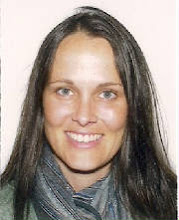
While in Nyeri, Shannon toured a couple of the farms and introduced them to Georgia McPeak (pictured above), who is the country director and their new focal point in Kenya. They also visited a family run coffee wet mill and agreed on processing terms for the Organic Farming group.

Wednesday, Shannon met with Dorman’s Coffee group to talk about the local coffee industry, current coffee prices, the auction and their work with farmers in Kenya.

On Thursday, she met with Taylor Winch Coffee Company a potential partner for exporting the coffee.

Then on Friday she met with Su of Green Dreams, RDC’s local partner for organic market access for the farmer’s other produce. Part of RDC’s mission is to diversify the farmers’ income streams by encouraging them to grow and get more money for alternative crops as well as just coffee. This diversification improves the soil quality and makes them less reliant on one income stream that is susceptible to market fluctuations. Other income streams will include company dividends—as a group they sit on the board of Safi Coffee—and money made from carbon offsets through a tree planting program RDC is implementing.

Also on Friday, Shannon picked up the first batch of coffee from Taylor Winch, and set up the structure for more to be purchased later. Shannon cleared US customs early this week with an initial 50lb tasting bag and broke her home popcorn maker in her eagerness to roast it!

Compostable coffee bags have been ordered and label designs drafted, in order to make the very first NY Safi Coffee sales possible in early 2010! Watch this space for more info…!

Tuesday, 8 December 2009

Trip to Kenya

This week Shannon Mulholland (executive director of Rural Development Connections and CEO of Safi Coffee) is in Kenya meeting with the farmers participating in the Coffee Connections program and setting the wheels in motion to buy the first round of coffee for roasting and sale in the US next year. Earlier in the week she picked up the official Kenyan NGO registration documents which means RDC can really start to ramp up its programs and start to make a real difference to the lives of Kenyan coffee farmers.

She visited some of the farmers in the program and here are some of the photos she took:


Monday, 7 December 2009

Smallholder Farmers Bear Brunt of Climate Change

Kenyan Crop Yields Are a Fifth What They Were 50 Years Ago

As the climate change talks in Copenhagen get underway, Rural Development Connections executive director Shannon Mulholland travels to Kenya to meet with the farmers taking part in the Coffee Connections Project and to buy the first round of harvested coffee on behalf of farmer-owned direct trade coffee company, Safi Coffee.

"Its raining today. It has been raining for the past two weeks after months of no rain. Nyeri is expecting 15mm over the coming week mostly occurring today (Saturday) and on Wednesday," she wrote over the weekend.


Climate change is particularly affecting developing countries such as Kenya--normal seasonal dry periods are lasting longer and turning into droughts. When rain comes it causes floods because the ground is baked dry and cannot absorb the water.

Rain Shortage
According to the USAID FEWS Net Weather report for December 3 - 9 2009:
Many local areas in southern Sudan, western Kenya, Uganda, and the SNNP region of Ethiopia have been impacted by poor pastoral and agro-pastoral conditions due to long-term moisture shortages. Favorable late October – early November rains have improved some areas of dryness, except in northwestern Kenya. Drought and crop loss have also been reported in southern Sudan.

Food, Crop Security
Kenyan prime minister Raila Odinga told a UN conference last week that climate change is threatening to negate economic gains made in the recent past in Africa, as it is affecting food security, according to this article in Kenyan newspaper, The Standard.

"Most countries now live between disasters; That is, rains are bringing floods, while dry seasons have become drought spells as a result of climate change," the article quotes Odinga as saying.

Smallholder Farmers Struggle
Small-scale farmers are feeling the brunt of changes in climate, according to this article by the Mennonite Central Committee, published on ReliefWeb, a United Nations portal. Thanks to worsening growing conditions, crop yields today are a FIFTH what they were 50 years ago.

From the article:
About 50 years ago farmers could expect to produce 25 bags of maize from one hectare (almost 2.5 acres), each bag weighing about 198 pounds, said Joshua Mukusya, a farmer whose family has been tilling the ground for generations. He lives in Kola, a community in the semi-arid Machakos District in eastern Kenya, about 56 miles southeast of Nairobi.

"Now, you will be very lucky if you get five bags per hectare," he added.

Climate Change Harms GDP
The Kenyan economy--where agriculture accounts for a quarter of GDP--are suffering as crops become less reliable. A British and Danish funded-study entitled Economics of Climate Change in Kenya predicts that Kenya could lose up to 3% of its Sh2.6 trillion GDP annually by 2030 due to global warming, according to The Standard. "Climate impacts cost Sh37.5 billion annually," said a summary of the report.


Rural Development Connections aims to help smallholder farmers that are struggling because of climate change. For more information on our work, please visit our Rural Development Connections' homepage.

We are a non-profit and as such funded by generous donations. If you would like to make a contribution, please use the Donate Now button on the left hand side of this blog.

Please also consider purchasing an Outside the Box gift for your loved one this holiday season--gifts include drip-irrigation, tools, organic and fair trade certification to help the farmers produce more and better crop yields.


Wednesday, 2 December 2009

Climate Change is Not a Myth - Just Ask Our Farmers

"Developing countries are bearing the brunt of climate change now. It's not something that might happen in 10, 20, 30 years time," Helen Clark, the administrator of the U.N. Development Program told the Associated Press yesterday.

This article describes how developing countries will need tens of billions of dollars each year to cope with the effects of climate change. As the world's leaders prepare to meet in Copenhagen later this week, we hope they are hearing this message.

That climate change is affecting the developing world is a fact our farmers in Kenya know only too well. Rainfall has become scarcer and scarcer in this part of the world, which already needs every drop. Over the last ten years rain has become less and less reliable, pushing our farmers deeper into poverty. The Nyeri area where our farmers operate only had 58 percent of its usual rainfall last year, according to the Kenyan Meteorological Department. Coffee needs a lot of water to grow, and unreliable rainfall prevents these farmers from achieving sustainability.

As part of our fundraising efforts to help impoverished Kenyan farmers, Rural Development Connections is offering charitable gifts this holiday season, that will buy tools and items that will help make them more efficient farmers.


Water as always is key to their success as farmers, and our charitable gifts include drip irrigation - which at $75 for a one-acre farm is far cheaper than $1,000 an acre for a conventional system - and a family's share of a community well, which will provide them with clean drinking water as well as water to irrigate their farm with.


For more information and to purchase an Outside the Box Gift from Rural Development Connection visit www.ruraldevelopmentconnections.org


Friday, 27 November 2009

Outside the Gift Box

It’s that time of year again! The holiday season is upon us. Which means lots of pushing and shoving at the mall, trying to find the perfect gifts for people that already have much of what they need.

This holiday season, why not consider a slightly different kind of gift? Rural Development Connections has a range of charitable gifts to offer, where every dollar you spend in your loved one’s name goes directly to needy Kenyan farmers. We’ll send you a card containing a picture of the gift and you can give that straight to your loved one. Click here to browse gifts!


You can choose to plant a tree, which will help reintroduce biodiversity and strengthen the soil, or buy a family’s share of a community well so they have clean water to drink and with which to irrigate their land. You could select new tools such as a wheelbarrow, hoe, machete or others to help make them more efficient farmers. Or you could purchase drip irrigation for a smallholder farmer, much cheaper than regular irrigation techniques, but just as effective. Buy a donkey to help a farming family transport fertilizer and crops (not at the same time obviously). There is also an option to buy local organic certification or fair trade certification to help farmers get more money for the crops they harvest. Or finally our favorite – enough cow dung to fertilize a farm for four months. This is particularly needed by the farmers as years of deforestation and poor agricultural policy have left the soil weak.


All of these items are desperately needed by the farmers in the Rural Development Connections program, which aims to provide them with the tools and the knowledge to sell their crops on the global market and move themselves higher up the value chain.

Unlike many charitable gift schemes, Rural Development Connections can guarantee that every single penny spent will go towards the gift selected. No admin fees, no siphoning off here or there, and no putting it into a larger pot for us to decide later how it is best spent. That means that if you want to buy a donkey in your best friend’s name, then a donkey is what will be purchased.

This cuts to the heart of our commitment to being Safi at all times – Safi means honest and transparent in Swahili.


The only time we do reserve the right to reallocate funds is if orders are received for an excessive amount of one particular type of gift. For example, if we receive orders for 700 donkeys and there is only a need for say, 60, we will fill the need first and then use the remaining funds to purchase the other much needed items. We hope this is understandable.

Thank you for considering a Rural Development Connections Out of the Box gift, and happy holidays!!

The Rural Development Connections team.


P.S. For more information on Rural Development Connections, the Coffee Connections project, or Safi Coffee, please see the following links:
www.coffeeconnect.org
www.ruraldevelopmentconnect.org
www.saficoffee.com


Share Delicious
Bookmark this on Delicious

Tuesday, 20 October 2009

Rotaract Halloween Party Supports Rural Development Connections


SAN FRANCISCO, October 19th, 2009¬—Rural Development Connections, a local non-profit organization which promotes fair trade and direct market access for coffee farmers in Kenya, today announced that the fifth annual Rotaract Halloween party will donate part of its proceeds from ticket sales to Rural Development Connections. The event takes place at the Novato Horseman’s Club, Novato, California on Saturday October 31st. Tickets to the event are $35, and doors open at 7.00pm.

Rural Development Connections is a non-profit, non-sectarian organization dedicated to the livelihood of small African farmers and assisting in moving their crops higher up the value chain. It accomplishes its goals by supporting the improvement of the quality and quantity of crops cultivated, further developing the value chain in agri-business and contributing to stabilizing children’s complete education in rural communities. Rural Development Connections is run by Bay Area native, Shannon Mulholland.

“We are very excited that Rotaract has chosen to support Rural Development Connections in this year’s party. Rotaract really knows how to put on a great event and does fantastic work supporting local charities in the process. We are really pleased to have been selected,” says Shannon Mulholland, Executive Director of Rural Development Connections.

Growing up in the City of San Francisco and Marin County, Shannon has always been passionate about buying from farmers’ markets and supporting local organic farming methods. Through her career in international development, she has seen firsthand how African smallholder farmers are often marginalized and impoverished due to a lack of direct market access. Many Kenyan coffee farmers earn less than $0.02 for producing a bag of coffee that retails in the US at $12. Last year the average Kenyan farmer made just $14 in coffee sales—for the entire year.

With this in mind, Shannon launched Rural Development Connections in 2008. Rural Development Connections’ largest project is the Coffee Connections Project, which provides international direct market access for African coffee farmers. This project partners Rural Development Connections with Safi Coffee, an African farmer-owned, fair-trade coffee company based in San Francisco. Safi Coffee will launch its Farmer Direct coffee in January 2010, through local Bay Area schools.

For more information, contact:Shannon Mulholland, info@ruraldevelopmentconnections.org or to buy tickets http://www.rotaracthalloween.org/

Rotaract Novato
Rotaract Novato is a branch of Rotary International that is comprised of young professionals and students who are committed to making an impact in the community through service, non-profit collaboration and networking events. Rotaract fosters leadership and responsibility, encourages high ethical standards and promotes diversity, international understanding and peace. To learn more visit http://www.novatorotaract.org/.

Rural Development Connections
Founded in 2008, Rural Development Connection's mission is to provide rural income generation opportunities to small scale farmers, discourage negative urbanization in sub-saharan Africa, and to encourage the completion of education of rural inhabitants. For more information visit http://www.ruraldevelopmentconnections.org/

Safi Coffee
Safi Coffee is a farmer-owned, fair-trade company, providing direct market access to African coffee farmers. Safi Coffee sells coffee Farmer-Direct in order for farmers to earn incomes as equity owners of their own company rather than from the bottom rungs of the supply chain. For more information visit http://www.saficoffee.com/