Wednesday, 29 July 2009

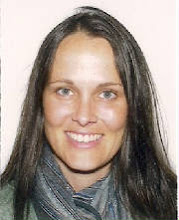
Summer Intern, Krisandra Adams' accounts of her summer in Kenya


When looking for a Summer internship, the last place one might expect to end up is in Africa. Well that was the last place I expected to be anyway, but as the month of May drew to a close, I found myself within the heart of Kenya in a lovely city called Nairobi, interning for an NGO called Rural Development Connections (RDC). RDC works to help farmers find ways to improve the quality and quantity of their crops, to be able to profit more from agri-business, and promotes the completion of children's education in rural communities. Through RDC the farmers will be able to learn how to profit more from their crops on their own and not have to be dependent on RDC forever, and by pushing for the education of their children, the future generations will have the opportunity to pursue other livelihoods, if they wish, or be able to improve upon systems that their parents have developed for the farms.
The first thing that struck me when I arrived in Nairobi was how fast-paced and Westernized it appeared to be. The traffic was insane! The streets were packed full of speeding automobiles that did not seem to be following any traffic laws; at least not any traffic laws that I was accustomed to. There were many traffic lights, but no one paid any attention to those. They appeared to be more of a decoration than a safety precaution. On top of the crazy traffic, there were the Matatus. Matatus are a privatized bus system, but, in my personal opinion, anyone who chooses to ride in one of those death traps must have a few screws loose. I'd have to say the similarity of Kenyan culture to the Western culture I am accustomed to provided more of a culture shock than the African parts of the culture. I had come expecting to see people in more traditional African attire and living off the land. The last thing I had expected was to go to Nairobi and have it feel somewhat like home. Probably the scariest aspect of Kenya for me was the traffic and the Matatus. Once I had experienced that, the travel clinic's warnings about diseases and dangerous animals did not seem anywhere near as alarming as they first had. I would take facing down a lion over riding in a Matatu any day.
In Kenya, it seemed that everywhere I looked, I saw Western products being advertised. One can find Barack Obama merchandise anywhere. I even saw a man sporting a baseball cap that had the Cleveland Indian's baseball logo on it. Contrasted against this, the poverty of the country stood out in an almost glaring fashion. In Nyeri Town, the farmers live without running water or electricity. They reside in ramshackle huts that don't appear to provide much shelter. Within the city of Nairobi, there appears to be a higher standard of living, but it is obvious that people are still struggling to get by. Mothers send their children out into traffic just to beg for money. People will endanger themselves by standing in the middle of the road just to try and sell anything from a toy windmill to a kitten. I found it painful to see how hard the people work to only reap minimal benefits.
Working with RDC in Kenya gave me the chance to interact directly with the farmers who are a part of the program. My first impression of the farmers was that they are extraordinarily hard-working, very family oriented, and just friendly, happy people in general. One of the farmers, David Gachigi, stands out in my mind because he reminded me of a large, happy teddy bear. He is the type of person that you just cannot help but want to give a hug to. Even though the farmers live in such dismal condition, they never seemed unhappy. Their community is very close knit. Multiple generations of the families live and work together, and even those that are not blood-related seem to be treated like family as well. When one young man died, the entire town grieved at his passing.
While with the farmers, my job was to gather information about them for the database. That should have been an easy enough task, except for the fact that many of the farmers had not had the chance to receive a formal education and, thus, did not speak English very well or, in some cases, at all. So I was able to converse with some of the farmers, and they showed me their crops and discussed their methods of farming, but there were many times that I required a translator. Thankfully, an amazing person named Peter, who seems to be a master of languages, is a part of the Kenyan team of RDC. The amount of laughter while Peter was speaking Kikuyu, the local tribal language, with them made me feel like I was missing out on something. Therefore, that experience has made me wish to study their language so that I can eventually go back and converse with them directly.
During my stay in Kenya, I did do the tourist thing. I went out on safaris in national parks, Seeing giraffes, zebras, and warthogs close up, and getting stuck in the midst of a herd of buffalo was pretty nifty. I even got to pet a baby rhinoceros that reminded me of a hard, slimy puppy. But, in the end, I believe that my most important experience was with the farmers. It taught me something about life. Even with the barriers caused by cultural differences and languages, we can still connect as human beings with a hearty laugh and a big smile that can never be misinterpreted.

Tuesday, 19 May 2009


One of our objectives is to provide market access to farmers. The main way we are going to do this is via the farmer owned coffee company in the USA. However, coffee only harvests 1-2 times a year and that is a LONG time to wait for an income. And that means that the farmer’s income is wholly dependent upon one crop and may become dependent on our programming, which is not good!

So, I met with the company in Nairobi who is the main distributor for organic produce in Nairobi. They provide all kinds of produce to higher end retail stores. The farmers we work with are so impoverished they can not afford chemical fertilizers and pesticides; as such their crops are organic, just not on purpose and not certified. The organic distributor has greed to start purchasing our farmers “alternative” produce (beans, potatoes, sweet potatoes, avocados, etc) at 25-100% premium prices to what they make now selling locally as long as they start a program to become certified organic.

We are assisting with facilitating the certification process through the Kenyan Organic Certification. This certificate is not acknowledged internationally but it is a stepping stone for the coffee to become internationally certified organic. We are going to pay for half of the certificate costs up front and have negotiated on behalf of the farmers for them to pay the rest off in increments via the sales of their produce. This ensures the farmers know that they are part of a team with us and we are not providing handouts, but will help hard working dedicated farmers. This also will give the farmers literal ownership of the registration and the process.

If we connect the farmers to this market, the farmers will have an alternative income (not only coffee) and get paid several times through the year. The next step is an organic farming workshop, where the farmers can learn what they have around them that is natural that can be used to make organic pesticides, fertilizers and ideal foliage for companion planting.

To my surprise yesterday, I learned that the farmers organized themselves (without us asking) and elected a chairperson, secretary, treasurer, 2 coordinators and 3 (women) members to a board with will over see their new co-op. They have even started measures to get registered legally! I am so impressed with their initiative and dedication to making their project work!

Sunday, 10 May 2009

Coffee Connections is lead by a Wanjiru


This week has been an interesting week indeed. I arrived in Kenya on Sunday to officially start-up the Coffee Connections program. Having previously lived in Kenya, I relied on friends and previous colleagues to assist me in gaining the correct contacts and information I need to be successful in start-up. I spent much of the first week trying to get operational issues completed: visiting the farmers, buying a car, finding a suitable location for an office, assessing whether the recent killings in the area by an organized group threatened being based in the pre-identified project site, obtaining government support and, of course, fundraising.

Visiting the farmers was an amazing and unique day. Until that day, the farmers had only liaised with the Program Manager, whom is a national staff member. In an area where ex-patriots are not common, rightly so the farmers wanted to meet me. They were apparently not expecting a woman, as many jaws dropped when I introduced myself as the Executive Director of this organization. While gender politics were apparent, I believe I quickly won over their trust and respect as we spent two hours talking about their needs, desires and what I believe Coffee Connections can affect. I was re-named by a man on the street "Wanjiru", which means woman in Kikuyu (a local tribal dialect). The farmers assured me they would work hard and I confirmed we had to work as a team to accomplish all of their livelihood development goals.

After being so encouraged by the eager farmers I knew I needed to open an office and find a vehicle ASAP. The vehicle had to be a 4X4 given the bad dirt roads would quickly turn to mud as soon as it rained! I feel that the NGO Gods were looking down on me, as I met a previous colleague who agreed to sell us his 4X4 for half its value and accept a payment plan as we don’t have enough money to buy it outright! Sure enough the same day we found out that our office would only cost 1/10 of what we expected to pay and the local Massai tribe whom we will be buying cow manure from as an organic fertilizer which is less A LOT less than the shop prices!!!!!! It is funny that I am so excited by inexpensive 4X4’s and cheap organic fertilizers! While many may find me sad, I am over the moon. Now all I need is to find a couple of foundations that will support us financially!

All in all it’s been a very good week! It’s International Fair Trade Day and The Coffee Connections Program will be able to look back at this as an anniversary: the day we started to affect change for Kenyan coffee farmers!

Thursday, 2 April 2009

Name Our Coffee Company Contest

We our inviting you to participate in Name Our Coffee Company contest. Coffee Connections’ retail arm will be launched in 2010 and we need a name for it. Our Coffee Company is different than others out there because it will be owned by coffee farmers, so consumers know that they are buying it directly from the source… no middlemen in this outfit!

We want our name to represent 4 main concepts: a high quality coffee, a farmer owned company, organically grown and environmentally minded. So put your thinking caps on and come up with the most brilliant coffee company name you can think of.

All Name Our Coffee Company contest submissions must be submitted by 30 April 2009 on our website: http://www.coffeeconnect.org/id65.html The winning entry will receive five pounds of fresh roasted coffee and a the new coffee company’s t-shirt.

Thursday, 26 March 2009

Net Impact Backs Coffee Connections for the March 2009 ideablob showdown

Coffee Connections is working hard to collect as many votes as possible to win ideablob.com's monthly start-up funding contest. Net Impact, a global network of leaders who are changing the world through business, backed Coffee Connections in this month's show down via their weekly newsletter on 25 March 2009.

Read Net Impact's 25 March 2009 Newsletter:
http://www.netimpact.org/associations/4342/files/20090325.htm


Remember to vote for Coffee Connections by the 31 March: www.ideablob.com

Saturday, 21 March 2009

Coffee Farmers Need your VOTE


When I wake up in the morning all I want is a really good cup of strong coffee! I am not too concerned about anything else. I walk straight to the kitchen, grind some fresh roasted beans and make a pot of coffee. The smell alone makes me happy to be awake!

I am a total coffee snob and love the good stuff! But through my travels I have met so many coffee farmers that do not have the right tools to farm effectively. Hence they end up producing a bad crop and make very little money... so I started http://www.coffeeconnect.org.

Coffee Connections is a non-profit, non-sectarian organization dedicated to the livelihood of small scale African coffee farmers and assisting in moving their coffee higher up the value chain.

We are in a contest to win 10,000 USD in start-up funds for our coffee farming capacity building project. We need your help...all your have to do is VOTE. Please vote for Coffee Connections on ideablob: http://www.ideablob.com/ideas/4887-Coffee-Connections

I am asking coffee lovers everywhere... please vote for Coffee Connections. Vote for better quality coffee, vote for more just prices given to farmers, vote for Direct-trade!